The Matriarchs of Bayou Road: The 40-Year Odyssey of Community Book Center
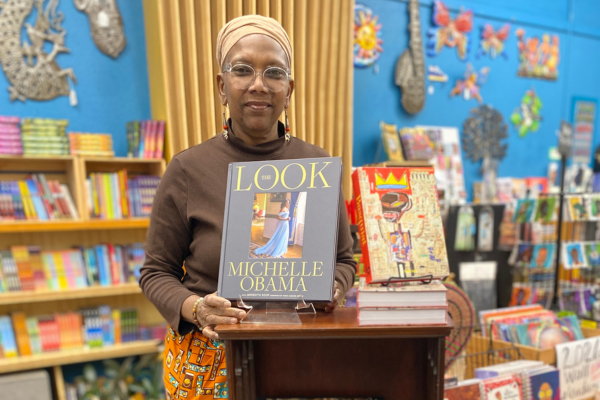
Mama Jennifer Warren-Williams began selling books in 1983.
In the heart of New Orleans, where the pavement of Bayou Road hums with the echoes of ancient trade routes, sits a building that is much more than a retail space. It is a sanctuary, a classroom, and a "community living room." As we stand at the intersection of the 100th anniversary of Black History Month and Women’s History Month, there is no better time to honor Vera Warren-Williams and Jennifer Turner, known affectionately as Mama Vera and Mama Jennifer.
Origins: Debunking Myths and Family Honor
The seeds of Community Book Center were planted long before the first book was sold and began not with a business plan but with a confrontation. For Mama Vera, the journey began with a family story of resistance. In the 1920s, a neighbor called her mother and aunt the "Gold Dust Twins, a derogatory caricature from a detergent box. Her great-grandmother’s response was legendary: "If you ever call them out of their name again, it’s going to be you and I."
For Mama Vera, the Gold Dust Twins were based in her own family history but she never really knew what they represented. But she knew they represented something negative because of this story her mother had shared. Her great grandmother’s response threw down the gauntlet on behalf of her daughters.
Decades later in 1978, Mama Vera attended the first Black Museums Conference at The DuSable Black History Museum and Education Center where she saw that same image in an exhibit on Black stereotypes, making her reflect on her grandmother’s protectiveness.
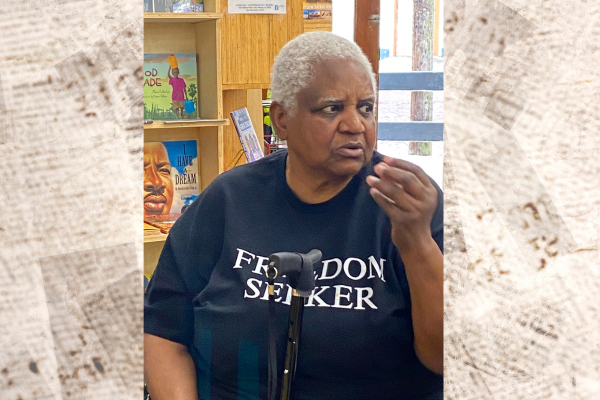
Mama Jennifer is always willing to talk to those who stop by.
"That experience put into me the need for there to be a place where these myths about our people and our history and our culture were debunked," Vera recalls. “We did that by showing you: 'This is what they thought of us, but this is who we really are.'" This realization, that Black history predates slavery and deserves celebration 365 days a year, became the foundation of her life’s work.
While Vera was fueled by the need for truth, Mama Jennifer, who Mama Vera met years later at a Black Heritage Festival, sees the bookstore as a revolutionary act. "You have to be aware of why you’re opening up a bookstore," Jennifer says. "Reading books helps you expand what’s inside your head." This love of books and culture is what kept these two going for years.
Evolution: From a Den to a Destination
In 1983, Vera took $300 from her personal savings, an investment she still highlights to young people today as a lesson in self-determination. Community Book Center was born in her parents' den. As a substitute teacher, Vera saw the hunger for representation. She noticed that books featuring Black children were treated like seasonal decorations, only brought out in February.
She credits the National Association of Black Social Workers for supporting her as a vendor. As a student she would travel to Black social worker conferences around the country and sell books. And she would bring some of those books to share with her students. She noticed the profound effect of having books with images of people who looked like them, images that represented their culture, history and especially the cultural traditions of New Orleans.
From here, Vera became a pioneer of the "pop-up" before the term existed—selling books at gas stations, flea markets, and church events. The community responded with a fervor that eventually outgrew her parents' home.
The journey to Bayou Road was a zig-zag across New Orleans: Poland Avenue, Ursulines Street in Treme, and North Broad. Each move was a lesson in grit. In 2003, when her rent on Broad Street was set to double, Mama Vera and Mama Jennifer faced a crossroads.
The move was a feat of sheer will. Vera found and purchased the Bayou Road building in just 30 days. "Don’t ever believe that it can’t be done," she insists. "If there’s a will, there sure is a way."
We didn’t have money. We didn’t have resources," Vera recalls. But serendipity intervened. While looking at a "shack of a spot" on Bayou Road, she met a woman whose business was flooring and interior design. The woman told her, "My building is for sale." Within a month, Vera went from facing a rent hike to owning her own building.
The Building and the Storm
The move to Bayou Road in 2003 was prophetic. Just two years after finding their footing on Bayou Road, Hurricane Katrina struck. Because the building sits on one of the highest elevations in New Orleans, Community Book Center didn't have flood insurance. While the bookstore sits on high ground, it wasn't spared.
"When Katrina hit, unlike the rest of the city, we only had two feet of water," Vera explains. But two feet of water is a death sentence for a bookstore. The humidity and dampness claimed the inventory. Yet, the "ancestor spirits" were at work. The wind had blown out the windows, but the iron bars remained, allowing air to circulate and preventing the catastrophic mold that claimed so many other structures.
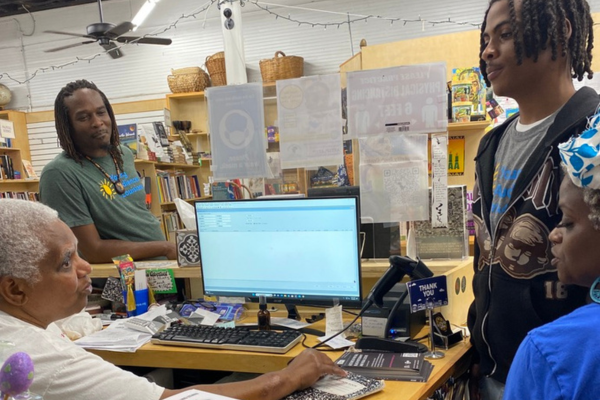
Roscoe Reddix, Akeim Nelson and Ja’nese Brooks Galathe with Mama Jennifer.
The rebuild was slow but intentional, fueled by community collaboration and the self determination represented by “kugichagulia,” part of the Nguzo Saba, the Seven Principles of Kwaanza. They poured new concrete floors, literally writing the date, April 2, 2007, into the wet cement. Vera’s logic was New Orleans-tough: if another storm came, they’d just pressure wash the floors and keep moving. During the recovery, Community Book Center even housed a center for minority contractors, proving that the store was always a "community resource" first.
The Word as a Revolutionary Idea
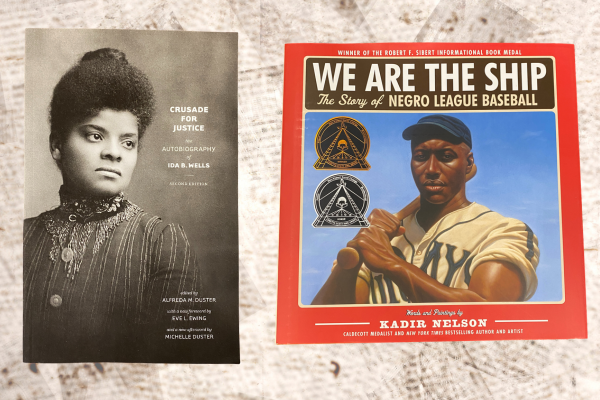
Crusade for Justice and We Are The Ship: Two books you can find on the shelves right now!
For Mama Jennifer, the store’s mission is also about "consciousness-raising." Whether she’s helping a child find a book about the Negro Leagues or hosting a storyteller, Jennifer believes literacy is an act of revolution. "Reading helps you expand what’s inside your head," she notes. "You have to be aware of who you’re serving."
For Mama Jennifer, the "Living Culture" of the store is best seen through the eyes of a child. She speaks with passion about children's books like We Are the Ship by Kadir Nelson which chronicles the Negro League Baseball players.
"I love the way storytellers work," Mama Jennifer says. "It’s a beautiful art form. It does so much." Whether it's teaching a child about their history or providing a space where it’s okay to be a book nerd," Mama Jennifer ensures that Community Book Center remains a sanctuary for every kind of Black identity.
The Future: Intentionality Over Convenience
As we transition into Women’s History Month, we honor the matriarchs who keep our stories safe. Their message for 2026 is clear: Be intentional. In an age of instant gratification, choosing to shop at Community Book Center is an investment in the local artists and the next generation of New Orleans leaders. Mama Vera and Mama Jennifer are education the community on the power of the local dollar.
Looking toward the future, the challenge has shifted from physical storms to digital ones. Mama Vera is candid about the "Amazon effect." She shares a story of a customer who mentioned they could just order a book sent to their house. Her response? An education on intentionality:
"Support the community that supports you," she insists. "The Black businesses in the neighborhood were the sponsors of the Little League teams, the cheerleaders... they gave back to the people that supported them."
The future of Community Book Center is one of continued collaboration, providing space for creatives and small businesses to get their footing. It is a model of "Black-Brown solidarity" and "Living Culture" that transcends the page.
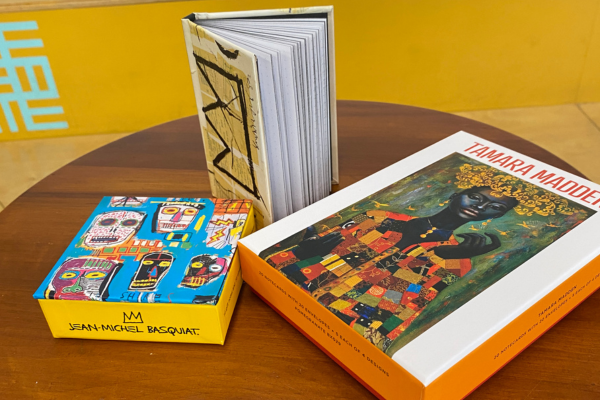
Community Book Center has gifts for everyone for all occasions.
At Community Book Center, the stories don't just stay in the books. They are told by storytellers, woven into the African print dresses on the racks, and lived out by the women who keep the doors open. As we bridge the gap between Black History and Women’s History, we celebrate the matriarchs of Bayou Road who ensure that our history is written in pen, not pencil and who have birthed a movement of self determination one story at a time.
Visit Mama Vera and Mama Jennifer at 2523 Bayou Road. Come for the books, gifts, conversations, and more. Stay for the wisdom, and leave as part of the legacy.